 Was ich am Studieren mag? Wenn es Früchte trägt. Wenn die ganze Leserei und Lernerei und Schauerei dazu führt, dass sich im Kopf eigene Gedanken bilden. Wenn man merkt, dass man sehr wohl schon in der Lage ist, eine ausgereifte, vielleicht sogar "professionelle" Antwort aus dem im Hirn Vorhandenen zu bilden, ohne vorher tagelang recherchieren zu müssen. Und ja, es ist ein gutes Gefühl, wenn es einem gelingt, den/die Prof zu überraschen.
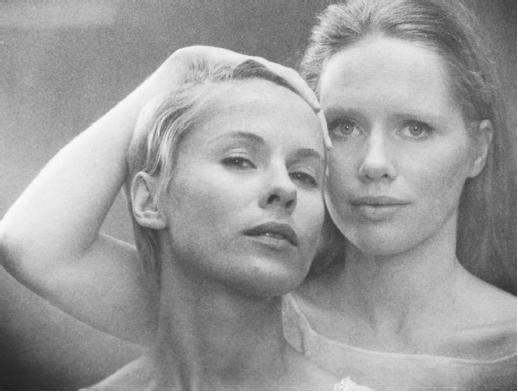
Gestern, während der Diskussion nach dem Film "Persona" (Bergman, 1965) war so ein magischer Moment. In meinem Kopf war hängengeblieben, dass der Charakter der Elisabeth Vogler (die das Sprechen verweigert) das Sprechen während einer Vorstellung aufgibt, bei der sie die "Elektra" spielt. Das wird nur ganz kurz erwähnt, man könnte es fast überhören. Und der Punkt auf den ich hinauswollte, war die Parallele zwischen Elektras Schicksal (a-lektra bedeutet "vom Bett (der Eltern) Verstoßene") als ungeliebtem Kind, ihrer Verhärtung und Rachsucht, ihrer Sehnsucht nach dem verlorenen Vater - und den Frauen in diesem Film, die ihre Kinder verlieren, verloren haben, von sich stoßen... Es ist sogar Elisabeths Sohn, der namenlos bleibt und nur einige kurze Minuten lang gezeigt wird, der das Hauptmotiv der Verschmelzung der Persönlichkeit einleitet: er übernimmt die Rolle der Elektra, wird aber nicht von Sehnsucht zum verstorbenen Vater getrieben, sondern von Sehnsucht nach der Mutter, die ihn verstoßen hat - damit wird er zu Elektras männlichem Gegenstück, Ödipus. Das Motiv der Eltern-Kind-Beziehung (wer schützt/ernährt wen?) wird in diesem Film also erst dann deutlich erkennbar, wenn man die Geschichte der "Elektra" näher betrachtet.
Ha, und das alles auf Englisch auszuführen, vor einer riesigen Klasse und einem wirklich kompetenten Prof. war schon nicht so einfach- und dann dessen erstaunte Reaktion... Hm, ja, ein absolutes Glücksgefühl!
Es geht nicht nur ums Angeben! Geht auch darum zu erkennen, dass die Kohle, die in mich investiert wird, nicht umsonst ist.
Und übrigens: ich habe trotzdem recherchiert. Auf die Idee, die Geschichte der Elektra im Zusammenhang mit diesem Film näher zu durchleuchten, bin ich nicht als Erste gekommen, natürlich. Aber die meisten Analysen sehen darin eine Vorgeschichte der Elisabeth Vogler, nicht ein Hauptmotiv des ganzen Films.
Ha, und das alles auf Englisch auszuführen, vor einer riesigen Klasse und einem wirklich kompetenten Prof. war schon nicht so einfach- und dann dessen erstaunte Reaktion... Hm, ja, ein absolutes Glücksgefühl!
Es geht nicht nur ums Angeben! Geht auch darum zu erkennen, dass die Kohle, die in mich investiert wird, nicht umsonst ist.
Und übrigens: ich habe trotzdem recherchiert. Auf die Idee, die Geschichte der Elektra im Zusammenhang mit diesem Film näher zu durchleuchten, bin ich nicht als Erste gekommen, natürlich. Aber die meisten Analysen sehen darin eine Vorgeschichte der Elisabeth Vogler, nicht ein Hauptmotiv des ganzen Films.
*°*°*
What I like about being a student are the moments when you realize that your work is actually leading somewhere, moments in which you discover that all this reading, learning and peering is leading you to new thoughts of your own. You suddenly see that you are perfectly capable of giving well-thought, "professional" answers to maybe difficult questions with what you already have in your head and without needing to camp in the library for days. And of course, moments in which you succeed in surprising your teachers.
My time came during the discussion on the film "Persona" (Bergman, 1965). It struck me that the charakter of Elisabeth Vogler (who refuses to speak and is therefor in therapy), stops talking durin a stage performance in which she plays the part of "Elektra". This is mentioned very briefly at the beginning of the film, but I constantly had to think of it. So during the discussion I tried to explain my instant association between Elektra's fate and some main motives of the film. Elektra (which means "the one pushed away from the - parents' - bed") is an unloved child driven by a burning love for her dead father and overwhelming hatred for her mother who she kills. Once you think of her story, the motive of children longing for their parents and parents losing or casting away their children in "Persona" really begins to stick out. Especially Elisabeth's son, who is just shown for a few minutes during the film and doesn't seem to be very important, initiates the main motive of the fusion of personality: he is a kind of Elektra, but not longing for a dead father, but for the unreachable mother. By this, he becomes Elektra's male counterpart, Oedipus.
Phew, wasn't easy to explicate all of this in front of a huge class and our very competent teacher in English - but, well, his amazed reaction made me feel so happy!
This is not about showing off (not only...) It's about realizing that all the money put into my education is worth something...
Oh, and of course I went to the library to do some research: in fact, I wasn't the first one to think about the meaning of Elektra's story in "Persona", of course. But the other authors generally interprete it as Elisabeth's previous history. Just so you know...
Phew, wasn't easy to explicate all of this in front of a huge class and our very competent teacher in English - but, well, his amazed reaction made me feel so happy!
This is not about showing off (not only...) It's about realizing that all the money put into my education is worth something...
Oh, and of course I went to the library to do some research: in fact, I wasn't the first one to think about the meaning of Elektra's story in "Persona", of course. But the other authors generally interprete it as Elisabeth's previous history. Just so you know...