Showing posts with label artsy stuff. Show all posts

Tuesday, November 20, 2007

you can't jump into the same river twice

time.
Zeit
.

Indo-Germanic:
dā. "to divide, cut, tear apart"

The "now" that is now, is no longer the same "now" in this very moment,

or:

"You can't jump into the same river twice" (Heraclitus)


However:

The "now" that was once remains unbroken in art,

or:

Heraclitus was not quite right...


Vermeer's Milk Maid
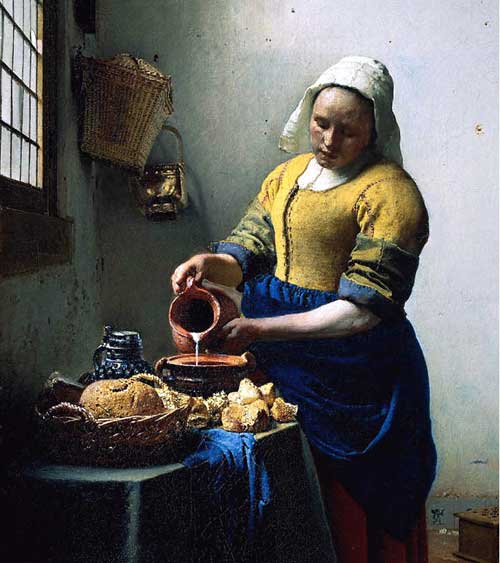
The constant flow of time in a calm flow of milk. The jug hasn't emptied since 1658.
(Check for close-up to see the impressive study of fluid in motion...)


Francesco Furini, Lucia
the smell of skin, the taste of dismissal, flicker of candles, rustling of fabric

Lucia, the saint of light, bathing in intimate chiaroscuro - between seduction and abstinence. Her charms are obvious, in contrast to her attribute, the eyeballs.

Bruno Liljefors, Jaybird
cool air, the smell of rotting leaves, surprise, infinity, fragility

The artistic point of view of a professional hunter.

Anders Zorn, A Premiere
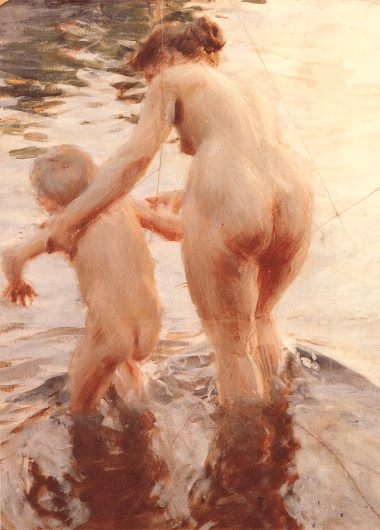
laughter, the gurgle of water, gooseflesh, the sound of splashing and encouraging words

In uptight Europe, Anders Zorn turned portraits of Nordic "shamelessness" into gold.

Friday, October 05, 2007

what's behind it?

What's inside?
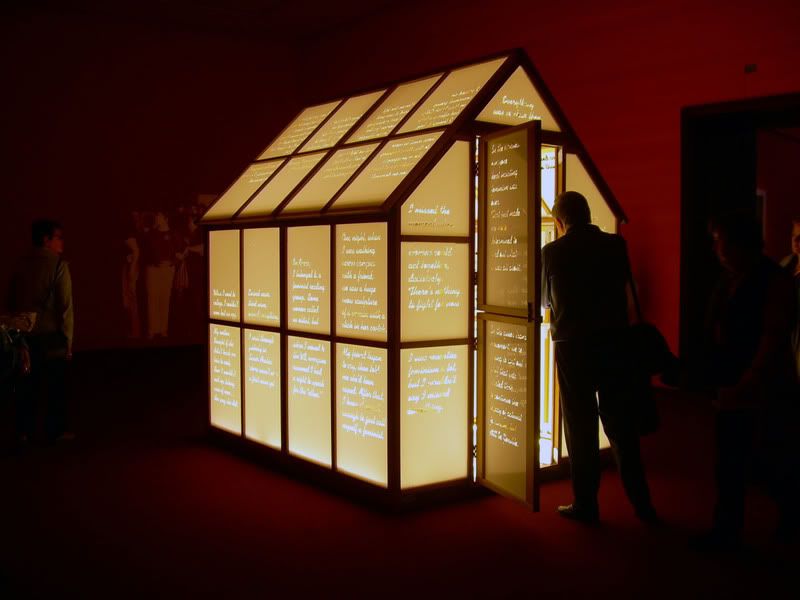
Mary Kelly's lighthouse of feminists' experiences

I've been thinking for a while now how to write about what I saw and learned at the Documenta 12, a big exhibition of contemporary art in Kassel, Germany. Time to write it down before the memories fade completely...

As usual, I already forgot most of the names and all the "important" stuff. What I remember quite well, though, is a way of thinking, a state of mind and the kind of bliss resulting from heavy intellectual labour...

I remember a group of people under the guidance of an admirable teacher, getting cerebral exercise in onion-peeling; finding layers within layers, within layers, within layers...

I remember being more than relieved to find myself with people and most of them not confusing their dislike of a work with its being art or not.

I remember thinking, rethinking, twisting things, looking at them again and again, feeling - really dissecting them... Asking zillions of questions:

Simple questions, but hey, once you start there's no stopping: What's the artist's object? How is it transferred? Why this way? Why not another? Do you actually understand the accompanying text? [good one!] Where does it come from? Where is it going? References? Memories? Facts? Beliefs? And - in what way can a museum destroy art?

I remember transformative experiences: meeting a work of art, not understanding it, and stepping away an hour later being all enthusiastic. I remember going to bed at night still brooding about something I saw, or heard, or felt, trying to catch it and find out what's behind it...

I also remember tired feet, an ugly city including pretty depressed looking people, a yummy turkish dish (forgot the name again...), cheap beer from plastic (?) bottles and lunch packages made from the hotel's breakfast buffet that fell apart in their paper wrappings after being tossed around for hours in our bags. Oh yes, and long busrides...


Alexander in battle, mosaic from Pompeji -
a still familiar viewpoint of history...

... transposed into "magnet" by Simon Wachsmuth
"Where we were then, where we are now", 2007


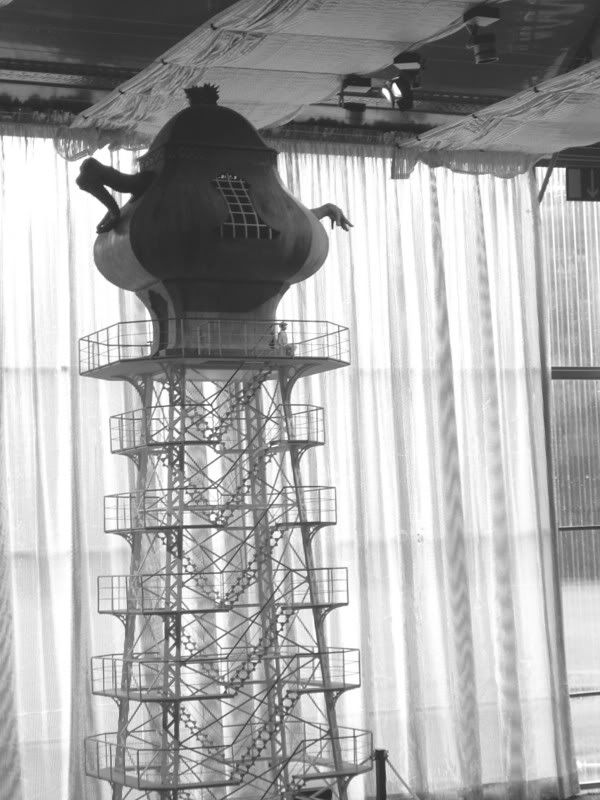
Celestial Teapot, 2006/07
Lukas Duwenhögger's proposal for a memorial site for the persecuted homosexual victims in the Third Reich

Sunday, August 19, 2007

Old People's Home

Peng Yu & Sun Yuang: Old People's Home

Picture: Nicolas Lackner, Landesmuseum Joanneum

It was a cynical, eerie and saddeningly comical sight:

13 wheelchairbound wax dodderers dancing a hopelessly disorganized and clumsy ballet in some sort of arena inside the museum (Kunsthaus Graz).

Rolling towards the visitors with senile determination, stopping in time just to bump into each other and get stuck for good...

An old man looking like Arafat, fast asleep and drooping backwards, did not notice that he got pushed around in circles by some other semi-concious wheelchair driver, until visitors took pity on them and disentangled the tragicomic spectacle.

With white hair, age spots and wrinkles, these old men looked alarmingly real - you'd expect them to snore, or cough, or startle up. But - nothing. Still, the inanimate handicapped stirred up much puzzlement, compassion as well as reservation. Despite the inanimatedness of the mobile exhibits, visitors and museum staff involuntarily found themselves in the role of nurses and caretakers in the Old People's Home.

(One of the countless China-exhibitions at the moment: China Welcomes You, Kunsthaus Graz, until the 2nd of September)

Wednesday, May 09, 2007

appendix & update

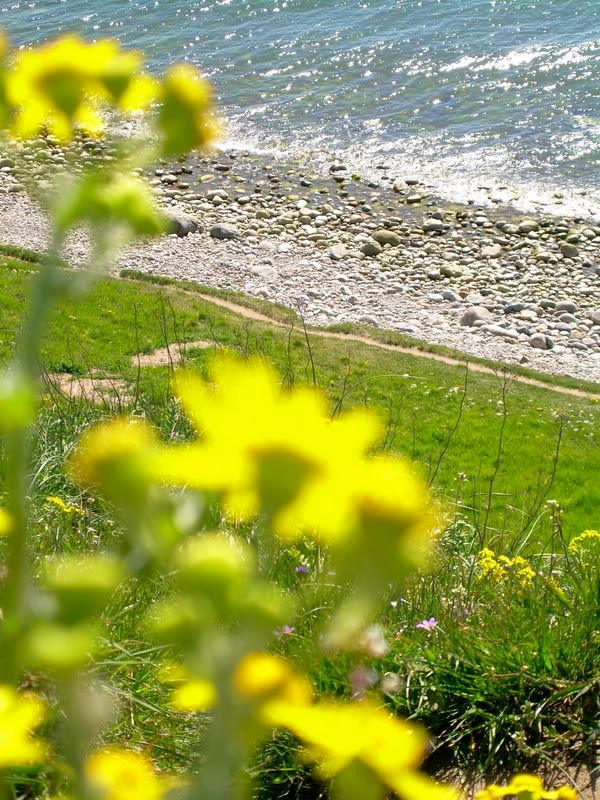
The cliffs near Ales Stenar

Afterword to my trip to southern Scania.
Not a lot of pictures.
Plus, I didn't take my camera to lovely Stenshuvud National Park.

Anyway.
I just hate stealing the illustrations for my blog from the Web...

My life here might be pretty idyllic, however, the topics I'm currently dealing with aren't. The spring term is nearing its end, the deadlines for papers, presentations and assignments are approaching, merciless professors are handing out even more papers, students are frantically working and missing the most beautiful days of the year :(
But, let's face it, I am learning a lot, right now...

Park at Häckeberga castle

I have just finished an enormously interesting book dealing with King Leopold's colonial terror regime in the Congo. In only ten years, the people working for the Belgian used up half of the Congo's population - an estimated 8-10 millions - in the chase for rubber and ivory.
Obviously, the other colonial forces wolfing down the African cake weren't any better. Still, cutting off heads and hands doesn't become an acceptable act, just because everybody does it.

The international movement against the Congo atrocities sprung from one man, E.D. Morel, and was one of the first and biggest, regarding human rights. Mark Twain participated in the Anti-Congo protest marches. Today, however, the whole story is forgotten.

All in all, Hochschild's book was a totally enjoyable and enlightening read:
King Leopold's Ghost

I am currently reading another high-class book for my course on religious terrorism:
Charles Kimball, When Religion Becomes Evil. Kimball presents five warning signs of corrupted religion, and tries to offer a series of correctives for each of them.

This course belongs, in a way, to one of these academic experiences that have deeply transformed my way of thinking, of researching, and my overall approach to relevant matters.

Let's face it - whether you're having a spiritual practice or not, whether you like religion(s) or not - they're gonna stick around for quite some time... And they are shaping our political, economical and social reality to such a great extent, that we ought to find a way to talk about and deal with these matters without being either afraid of being looked upon as a loony, nor ending up in the realm of blind beliefs, or total speculation.

Ales Stenar

With my group for this course, I am preparing the presentation of a Ugandan rebel/religious terrorist group, the LRA (Lord's Resistance Army). This group is (partly) responsible for one of the worst humanitarian emergencies worldwide - I doubt however, that anyone in the West has ever heard about it. Here is a blog on all recent developments: Uganda Watch

The deeper I delve into the subject, the crazier and hazier it gets. I ended up in a spider's web, where everyone seems to have their hands entangled in some dirty business.

The idea of a second, invisible reality known in many traditional myths, is often presented as an enormous spider's web that connects all beings, spirits, thoughts, places, and times.
Working here in Lund, I start to understand...

Saturday, April 28, 2007

the march of the emperor

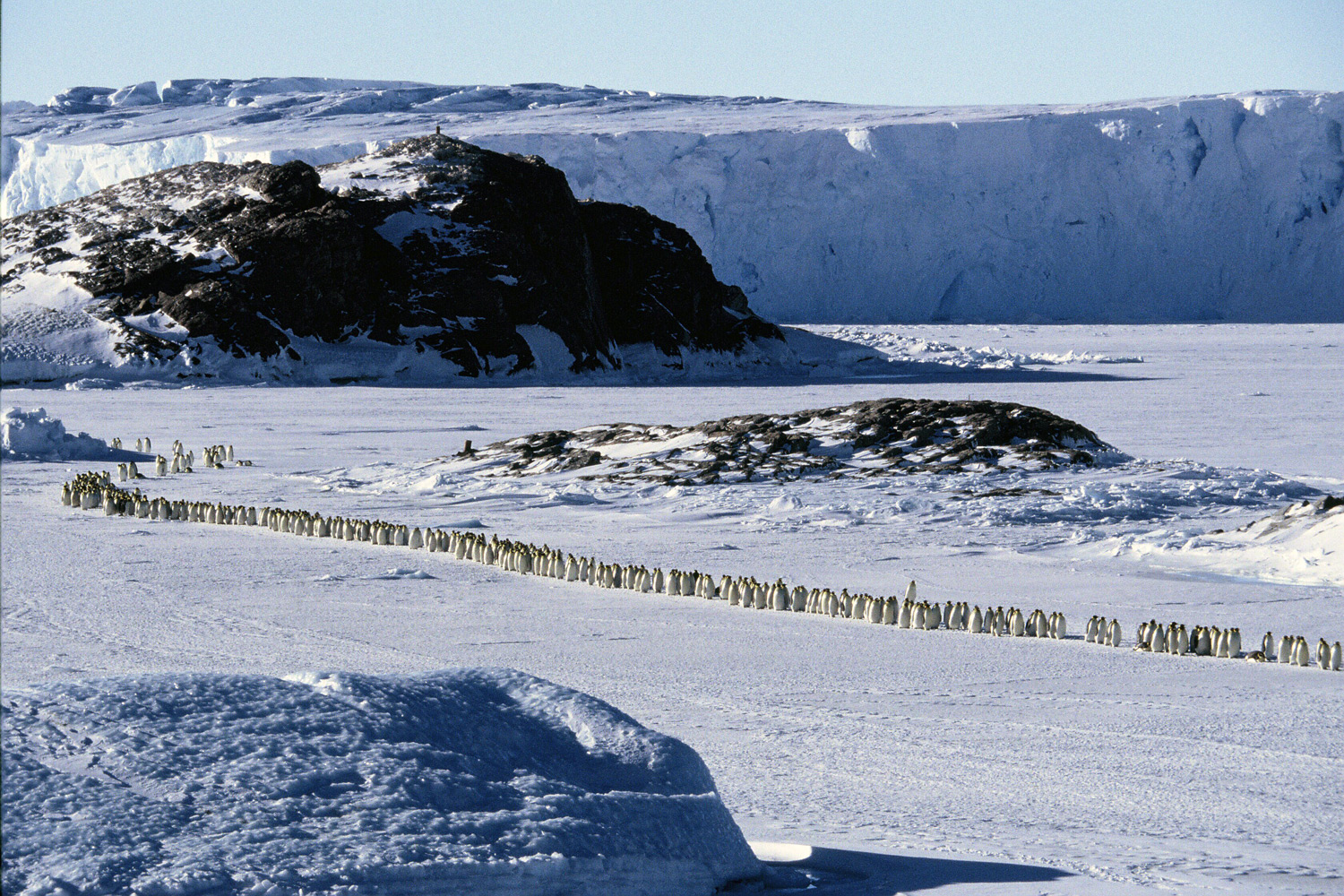
This is one of the most amazing (!) documentaries I have ever seen: March of the Emperor (La marche de l'empereur) . You can watch it here for free (bad sound, though, I'm sorry...)
Wikipedia tells me that the peguins started their journey around a month ago (90 kilometres to walk, for them that's approximately 40 days and more) to get to their breeding place. About now, they should have found their partners and mate. The girls will lay their eggs and walk back to the sea to find some food. The guys will have to wait for them with an egg between their feet, no food for more than 3 months, and additionally withstanding lethal windstorms and temperatures from -60° to -70° C...

This is why the Arctic explorer Cherry-Garrard said:
"Take it all in all, I do not believe anybody on Earth has a worse time than an Emperor penguin."
Oh - and you should definitely watch the following ad :D *lol*


Friday, March 16, 2007

up the little hill

The other day, up the little hill just before where I live, I could see the horizon again. I could smell the sea, and the wind was mild.

When you feel memories bubbling up, so old you probably didn't even exist when they were created,

when the warmth of the sun on your face wakes you up in the morning,

it's spring for sure.

A song that smells just as fresh and clean as spring-time:

Monday, December 04, 2006

memory


After a hard week and an exhausting Sunday (serving Glögg and Pepperkakor at the shop), we joined the International Memoir Society's first meeting yesterday evening. This society is presided by Susan McCabe, professor at the department of literature at the University of Southern California. The idea behind this Society - as far as I could get it - is to give artists from all over the world the opportunity to exchange, collect ideas and present their work, that should - of course - be linked to this rather ample notion of memory.


Susan was not there but I would really have liked to hear her opinion and have her lead the discussion. I read some of her poems - she's striking.
However, I had expected and at the same time feared the talk that came up. I'll seize the opportunities this platform gives me with both hands, but I have to find a way to go round this cliché-"art"-talk.

First, there were of course the unavoidable art comments, that "everybody is free to express everything with anything". Hum. I'd humbly like to state that I have quite a bit of a knowledge about this topic and that I don't have any problem with highly subjective art, BUT ... not any creative expression is suitable to be presented as art in public, however important to its creator.

Secondly, there was of course a long discussion about how our society is forgetting traditions; and about all these old people just waiting to die with no-one coming to collect all their knowledge. So, should this Society only collect the memories of our grand-parents? Are young people's memories not worth being dealt with?

It's an illusion to believe that there is something as "tradition". To be alive, a tradition needs to be constantly re-invented.


In early 19th-century Sweden, for instance, intellectuals bemoaned the loss of traditions and pilgrimaged to Dalarna, a part of Sweden considered as especially "Swedish".
There, they asked old people [!] to play them the oldest songs they knew, dance the oldest dances they knew and tell the oldest stories; completely disregarding the interesting new musical and cultural developments happening right in front of their eyes...


Now, of course, the work I would like to present in summer is again very subjective, but I'll try to avoid the slipperly "personal art" road and engage into something that I imagine to be useful and worth delving in for other people than myself.

Still; the starting point is very personal: trees. I've been "working" on this topic since early January, reading scientific and non-scientific books, visiting trees, taking pictures and collecting memories in a wider sense. And from the first moment on I remember falling in a kind of dreamy state whenever I spend some time under a tree; floating in images, sounds and scents.
One doesn't have to get metaphysical to aknowledge that trees gather under their bark memories older than the average human being. Most people don't realise how much influence the surrounding nature has on their own thoughts, actions and lifestyles...


All the pictures of this post (with the exception of the one above) have been taken at a hidden place near the river in the heart of Graz, where a wise willow has taught me many lessons in patience, truthfulness and protection during this spring and summer.

The sound of the river, sand on my skin and sun in my eyes - sublime memories!

Wednesday, September 06, 2006

trance

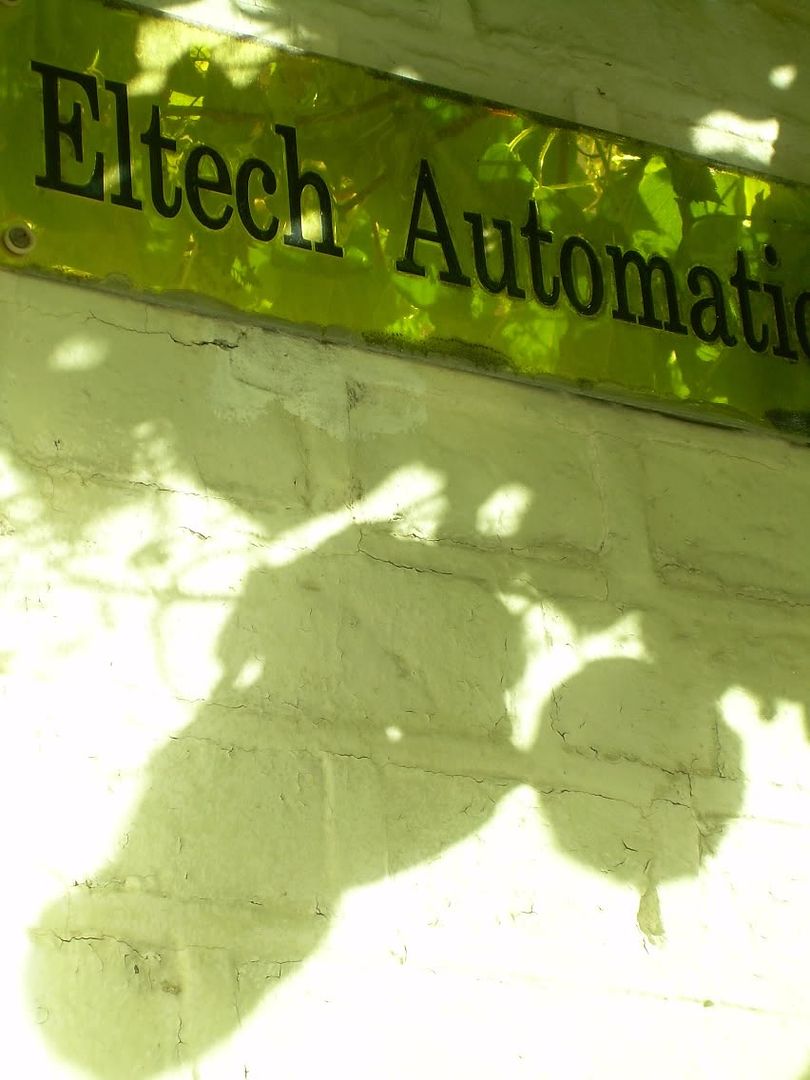
War gestern in der Stadt, um einen Brief abzugeben. Die Spiegelung einer Kletterpflanze in einer Metalltafel hat den Fotografier-Reflex ausgelöst... Und - peng - weg war ich... 2 1/2 Stunden und gute 50 Fotos später bin ich wieder aus der Trance erwacht... Hm, schön ist das, das Kuenstlerleben!...

***

I was in town yesterday afternoon to post a letter. I was walking by a beautiful shiny metall-plate reflecting a plant winding up the housewall. I immediately pulled out my camera and - zoom - I fell in a trance. I woke up 2 and a half hours and 50 pictures later... Mh, I like this arty life, it's so fulfilling!

that's how it all began...


phew... another sky-picture...
I'm sorry...


love for nature


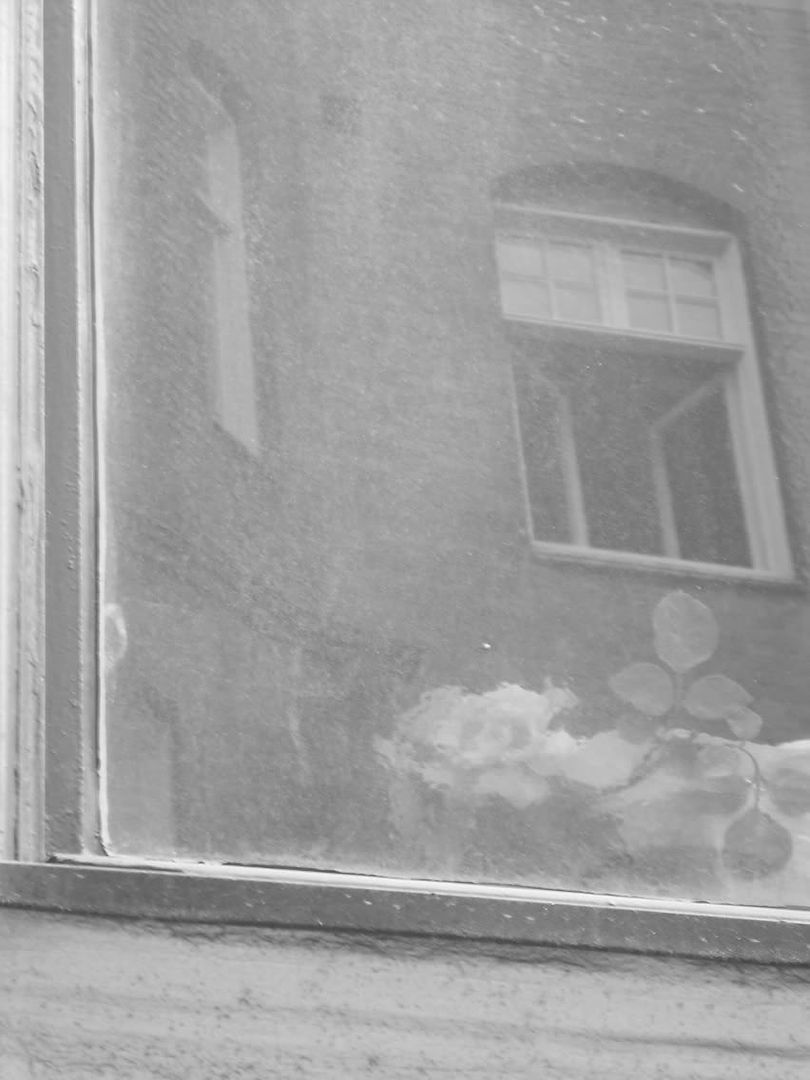
I don't know why, but when I saw this rose behind a dirty window, I felt like I was in Paris...


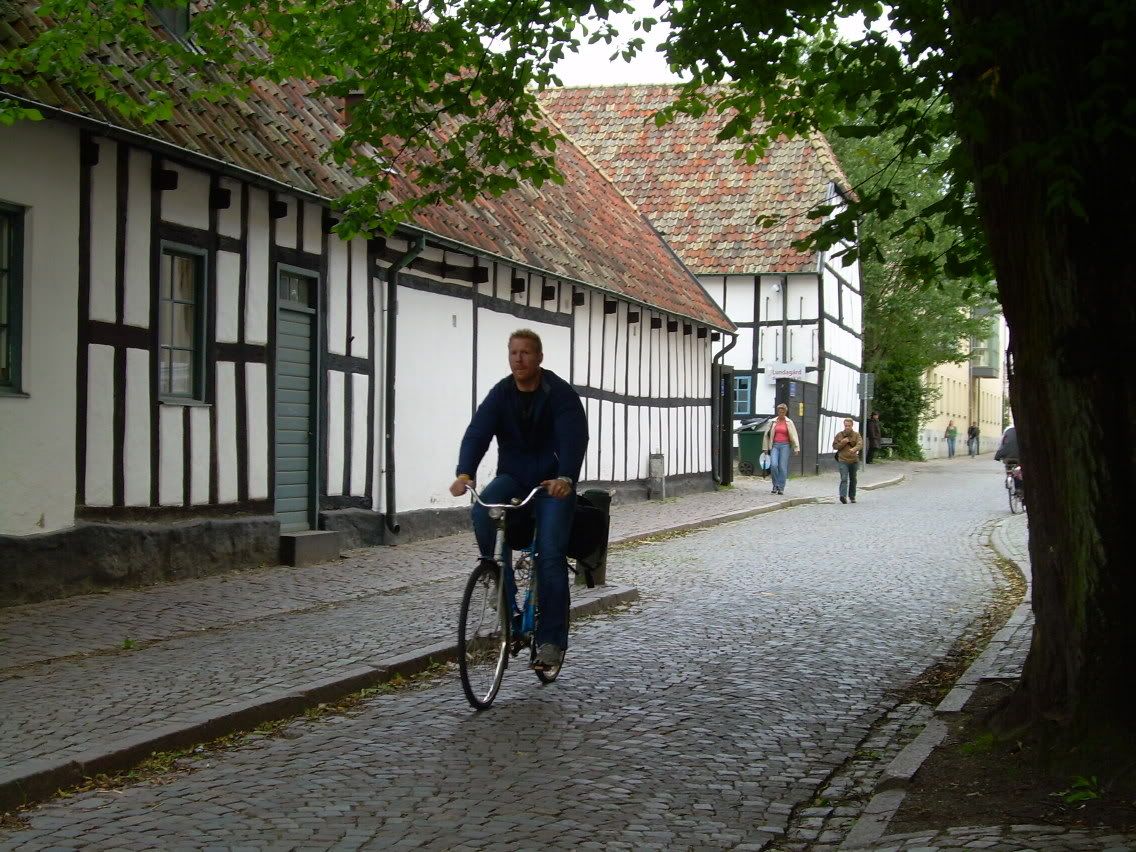
sometimes, the streets of Lund have the atmosphere of small Parisian alleys or backyards
and sometimes, the city feels just like a charming, cosy village...


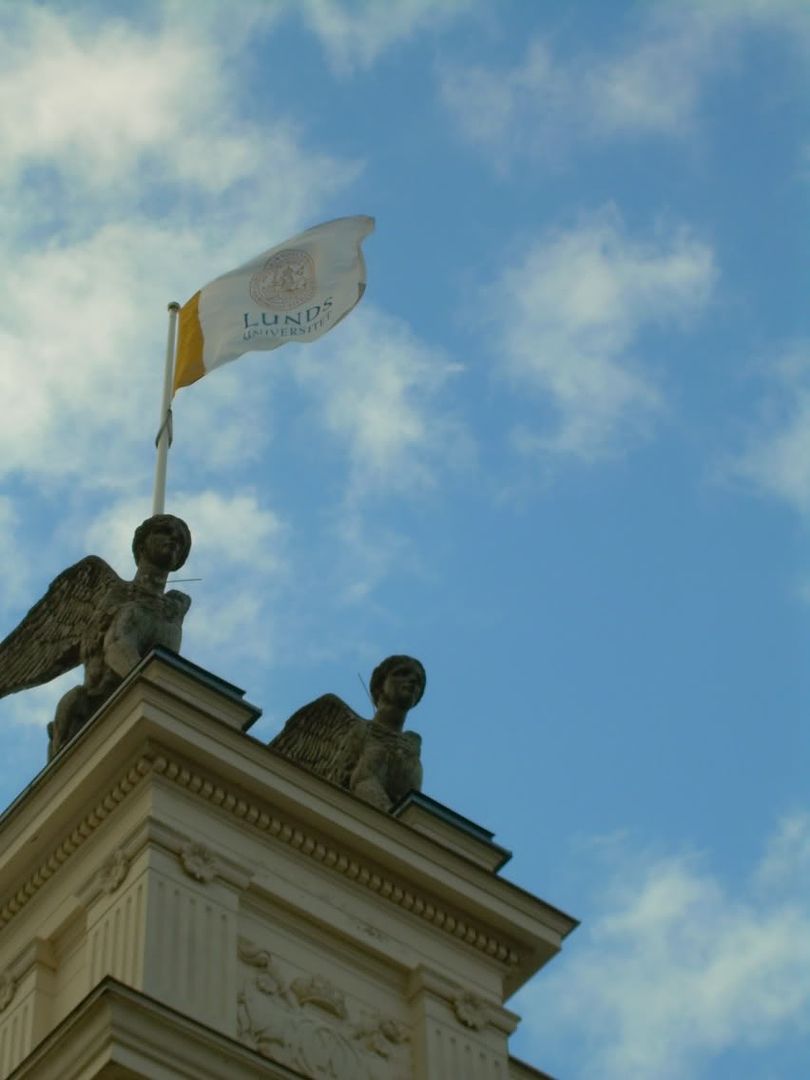
Sphinxes on top of the uni's auditorium

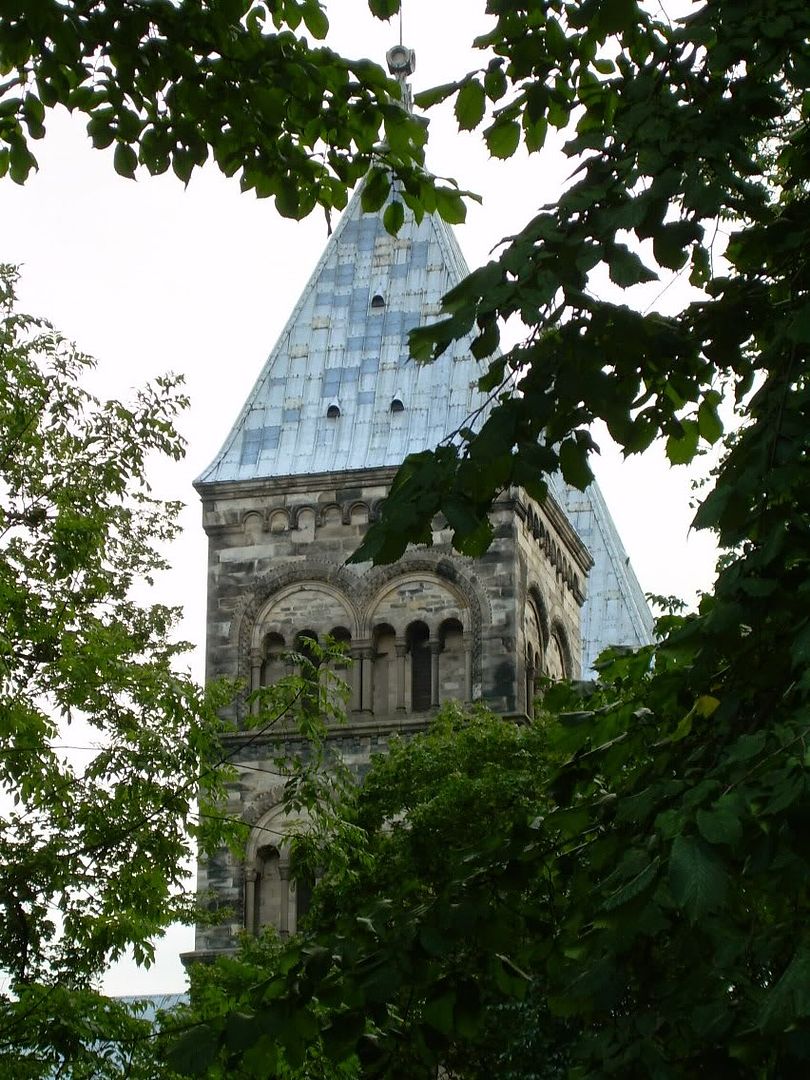
Domkyrkan


now I'm a stylish chick, too

good-looking young people everywhere


auditorium in the background

when I'm grown,
I'll earn a lot of money,
and live in my own huge appartment, with a drama-queen-bathroom all in red velvet with a fancy antique porcellaine bathtub on shiny golden feet, a LouisXVI make-up table, golden tassels everywhere,
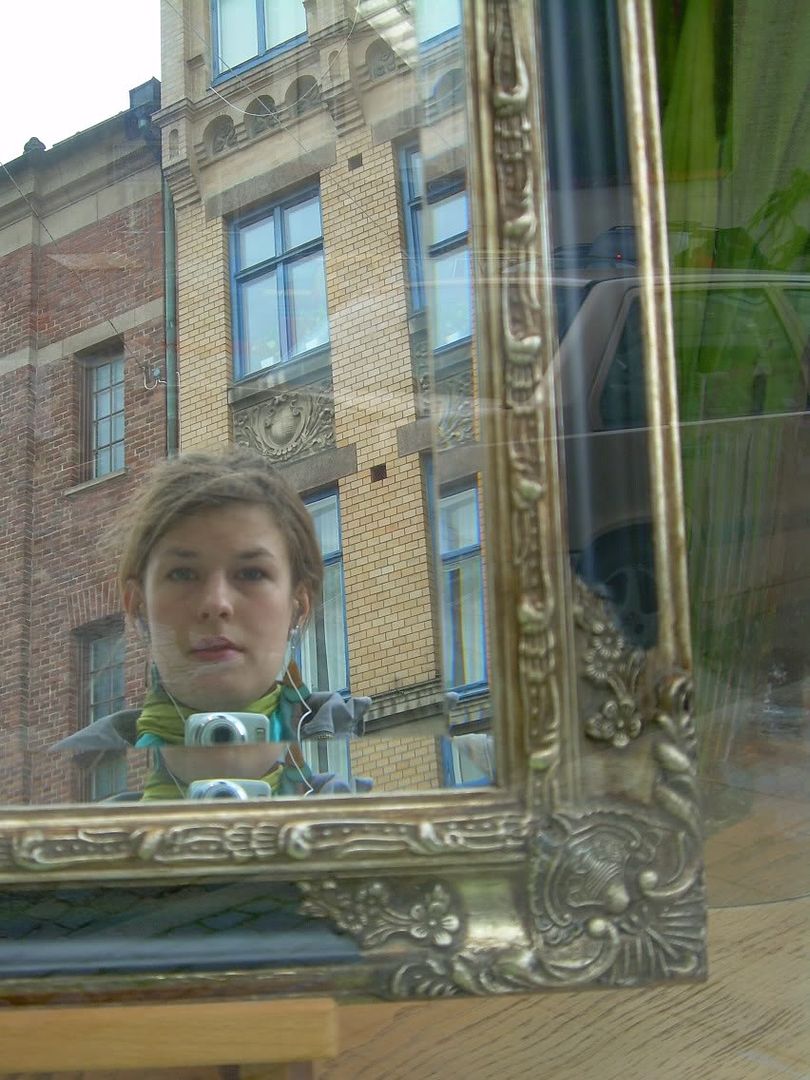
and: I'll have THIS mirror!

Sunday, September 03, 2006

Wider die Zwiederniss II

Und weil ich immer noch urzwieder und urgrantig bin, gibt es jetzt den zweiten Teil meiner gedichteten Lieblinge, diesmal aus der wunderbaren kleinen Anthologie "Blaue Gedichte", aufgegabelt in der Buecherstube in Graz, ihr wisst schon, die mit dem Leuchtbären vor der Tur. Und das Foto ist vom Ossiachersee im Mai. Schon wieder.


Blauer Abend in Berlin
Der Himmel fliesst in steinernen Kanälen;
Denn zu Kanälen steilrecht ausgehauen
Sind alle Strassen, voll vom Himmelblauen.
Und Kuppeln gleichen Bojen, Schlote Pfählen

Im Wasser. Schwarze Essensdämpfe schwelen
Und sind wie Wasserpflanzen anzuschauen.
Die Leben, die sich ganz am Grunde stauen,
Beginnen sacht vom Himmel zu erzählen,

Gemengt, entwirrt nach blauen Melodien.
Wie eines Wassers Bodensatz und Tand
Regt sie des Wassers Wille und Verstand

Im Duenen, Kommen, Gehen, Gleiten, Ziehen.
Die Menschen sind wie grober bunter Sand
Im linden Spiel der grossen Wellenhand.

Oskar Loerke (1884-1941),
aus: Die Gedichte, Suhrkamp taschenbuch

***

Fotoalbum
Ich mit dem blauen Auge.
Ich mit dem Buesserhemd.
Ich mit der Kornschnapslauge.
Ich mir bekannt und fremd.

Ich mit Achillesferse.
Ich mit dem Kinn aus Glas.
Ich mit dem Lindenblättchen.
Ich rosig leichenblass.

Ich mit dem Dreck am Stecken.
Ich mit dem Richterstab.
Ich mit den runden Ecken.
Ich, der ich mich nicht hab.

Ich mit zwei linken Fuessen,
Ich mit Fortunas Horn.
Ich mit den Ungluecksgruessen.
Ich tot und neugeborn.

Peter Maiwald (*1946),
aus: Lebenszeichen. Gedichte, Fischer

***

Frau in Blau
Fernes Beben der Erde der Hand der ganze
Körper bebt in feinen Pinselstrichen
Beben gebahnt durch Sehnen
und Muskeln Gewebe
Samtmieder Halsband Spitzenhäubchen
schwer wie der weg
den sich das Wasser aus den Steinsgeschichten
bahnt ins Blau aus reinem weissen
Schweigen leinenblassem Schweigen
in blaue Erscheinung blaue Fluchten
aus Kindertagen ins dreissigste Jahr
innerlich von Weinen geschuettelt muede
von so viel Form und Befreiung

Ulla Hahn (*1946),
aus: Galileo und zwei Frauen. Gedichte, Deutsche Verlags-Anstalt

Anm.: Zwiederniss ist sehr gut fuer die Schöpferkraft! Mein Notizbuch fuellt sich und fuellt sich...

Wider die Zwiederniss I

Ja, ich bin heute grantig und zwieder!

(Gruende unwichtig, aber wer es genau wissen will: ich sehe nicht ein, dass jedes Quäntchen Sonnenschein mit Hektolitern frischen Regens aufgewogen wird, ich habe was dagegen, dass mein Rad rosten muss, weil es nirgendwo untergestellt werden kann und ich wuerde gerne wissen, wo in Europa die Lieferung mit meinem warmen Wintergewand, meinen Lexika, Flöten und wichtigen Buchern verschollen ist. Soviel dazu).

Und weil ich heute also nix Gscheites zustandeschreiben werde, gibt es Ausgleichsliteratur von meinen Lieblingen, zum Beispiel Rose Ausländer, meiner Muse. (Und wer sagt, dass er sie nicht mag, fängt eine*grumpf*)


Auf meinen Wänden
blühen Bilder

Poeten dichten
im Regal
Ich schaue, lese
spreche mit den

schaffenden Gefährten

Mein kleines Zimmer
ist ein Riesenreich
Nicht herrschen will ich
Dienen.


***

Oder das Folgende (das erste Mal gelesen im Wald ueberm Ossiachersee - wo uebrigens auch obiges Bild entstanden ist -, und seitdem eines meiner liebsten Gedichte...):

Nie

nie
werde ich
die Drossel erreichen

nie mit drei Lauten
umzugehn wissen
als wären sie
alles


Alle beide aus dem Band "Die Sonne fällt".
Rose Ausländer: Portrait, Gedichtauswahl

Thursday, August 24, 2006

die wundersame mädchenvermehrung

Photobucket - Video and Image Hosting

oans...

Photobucket - Video and Image Hosting

zwoa...

Photobucket - Video and Image Hosting

drei!

(Thanh, i, Dava)

Sunday, August 20, 2006

Kåseberga & Ales stenar

Weite

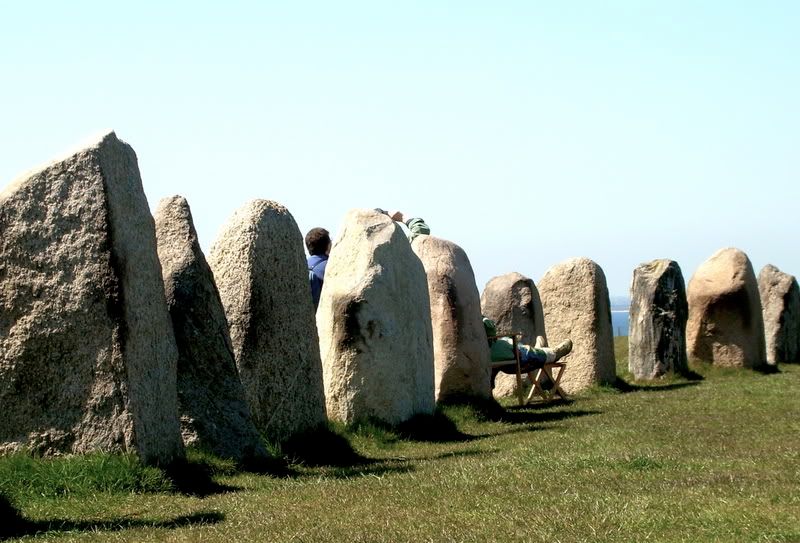
Kåseberga liegt an der Suedostkueste, direkt am Meer. Ueber dem winzigen Dorf, mit Blick auf dem Strand, haben vor ca. 1500 Jahren einige starke Leute Ales stenar errichtet - 58 Seine, die in Schiffsform aufgestellt sind. Zur Fruehlingstagundnachtgleiche geht die Sonne genau am Bug auf, zur Herbsttagundnachtgleiche genau ueberm Heck. Wir konnten keine Fuehrung kriegen, weil sich Wissenschaftler nicht auf das genaue Alter und den Zweck der Formation einigen können. Also geben sie lieber gar keine Informationen. %-/

Ich wollte aber gar keine Info. Ich bin nämlich zum Strand abgebogen und den steilen Weg zum Wasser runtergestiegen. Und genau dann hat es aufgehört zu regnen und der Himmel hat sich gnädig ein wenig geöffnet. Sehr schön! Der Mix aus Sand- und Kieselstrand hier gefällt mir wirklich gut. Hab nach Österreich gewunken. Und mich beim Wunsch ertappt, doch öfters am Meer sein zu können. Dummes Mädchen - ich hab's ja jetzt ein ganzes Jahr lang quasi vor der Haustuer! *freu*

***

Kåseberga is situated on the southeastern coast. It is famous for a stone monument called Ales stenar. This was erected 1500 years ago by some husky men who miraculously managed to arrange 58 big stones in the form of a ship. At the summer solstice, sun sets at the bow, at the winter solstice on the other side. There was no guided tour because some scientists can't agree upon the exact date of erection and purpose of Ales stenar. So they prefer not to give any information at all...

Anyway, I didn't want any information cause I prefered to follow a little path down to the ocean. Sitting on the stones I watched the sky, which has already become my favourite occupation here in Sweden. It's always worth a look, even when it's raining! Caught myself wishing I could see the ocean more often - still have to get used to the fact that I'll be able to go there whenever I want for the next 10 months!

steine


winkewinke

Greetings to Austria


bunte steine

Stones are so colorful here


wolkentheater

My own cost-free theater

take your time

Take your time, she said

Glimmingehus

Glimmingehus

Oppressing; sinister - though really vast and spacious

Der dänische Edelmann Jens Holger Ulfstand (Wolfzahn) hat sich Ende des 15. Jhs. Glimmingehus bauen lassen. Der arme Mann litt wohl ein wenig unter Verfolgungswahn, denke ich. Er wollte sich und seine Familie vor seinen vielen Feinden beschuetzen, hat aber seltsamerweise nicht bedacht, dass die gut 2,5 Meter dicken Mauern fuer damalige Waffen-Verhältnisse ein ziemlich mickriges Hindernis waren. Er ist trotzdem uralt geworden. Lag aber vermutlich eher daran, dass Glimmingehus damals mitten im Sumpf lag. Und wer will dort schon hin.

Glimmingehus was built by Jens Holger Ulfstand, a danish nobelman, at the end of the 15th century. The poor man must have been a bit paranoid, I guess. He wanted to shield himself and his family from his numerous enemies. But strangely enough he didn't notice that the approxemately 2.5metre thick walls of this building were actually useless to protect him against the weaponry of his time. Anyway, Jens died really old and never got attacked. Must have been because of Glimmingehus' environment then - marshland.


attic

The attic smelled of dust and wood aged some 500 years

thick walls